
Anthropic: What AI could do to wages by 2030
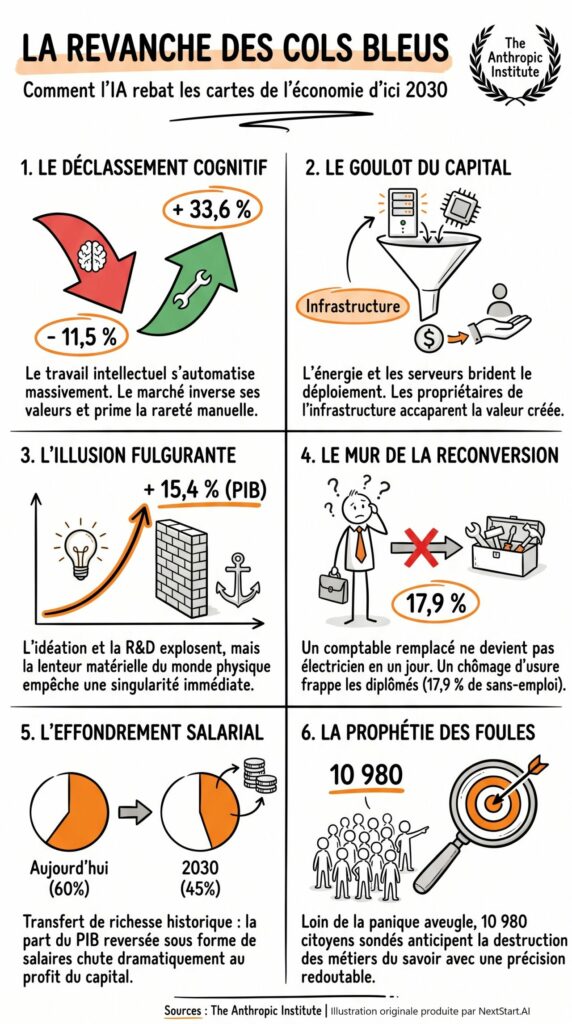
According to Anthropic, by 2030 the pay for intellectual professions could fall by 11,5%, while that of physical professions would increase by 33,6%.
This prospective model projects the effect of widespread AI adoption on the entire economy. In its most extreme scenario, six major disruptions would be anticipated:
1️⃣ Cognitive downgrading
Artificial intelligence targets intellectual work and spares physical tasks. By 2030, the value of our cognitive expertise is projected to collapse. White-collar wages are falling, while demand for manual labor is exploding.
2️⃣ Infrastructure rent
The significant productivity gains will not immediately benefit employees. The physical capital (servers, chips, energy) is time-consuming and expensive to deploy. By becoming the scarcest commodity on the market, the owners of the technological infrastructure will capture the lion's share of its value.
3️⃣ The illusion of innovation
Many hope that AI applied to R&D will trigger major technological breakthroughs. Certainly, the macroeconomic impact could boost annual GDP growth by 15,4%. But while the generation of ideas will explode, their application would remain hampered by the slowness of our physical world.
4️⃣ The slowness of the conversion
The promise that AI will create replacement jobs ignores a significant obstacle. An accountant displaced by a machine doesn't instantly become an electrician. This loss of skilled human capital would translate into a 17,9% transitional unemployment rate among knowledge workers by the end of the decade.
5️⃣ The decrease in the employee share
For the past forty years, the share of national wealth paid out in wages has been slowly eroding. AI could accelerate this trend. By 2030, only 45% of wealth would go to wages (compared to 60% today), marking a historic transfer of value to capital.
6️⃣ The Prophecy of the Crowds
Far from succumbing to blind panic, the general public has a clear-sighted view. In a survey of 10,980 adults, respondents anticipate the intermediate scenario, not the extreme one: a GDP approximately 8% higher than its trajectory and a 4% decline in cognitive employment by 2030.
And you? If your job becomes automated tomorrow, will you consider retraining for manual labor, or will you fight back on the cognitive front? 👇
Source: The Anthropic Institute (Korinek, Jones et al.), Scenarios for our Economic Future : https://www.anthropic.com/institute/econ-scenarios (research paper in PDF format)
This article is based on one of my LinkedIn posts. See the original post and discussion on LinkedIn →
To delve deeper: these scenarios complement our reading of the Anthropic study on AI that destroys or transforms our jobs, our article on AI that is shifting jobs towards older workers and the one on Energy as a competitive advantage in the AI race.